Hammarby IF's 2019 Allsvenskan title wasn't just a sporting upset—it was a financial and cultural anomaly. The club's annual turnover that year was roughly 250 million SEK, a fraction of what Malmö FF or AIK generate. Yet the trophy ended up in Stockholm's southern district. I've followed the club's accounts and match-day reports for years, and what stands out isn't the one-off triumph but the underlying model: a football club owned and financed largely by its own supporters.The numbers tell a story on their own. When Hammarby members voted in 2014 to sell shares in a new holding company, Bajen Fans AB, they didn't hand control to a billionaire. Instead。
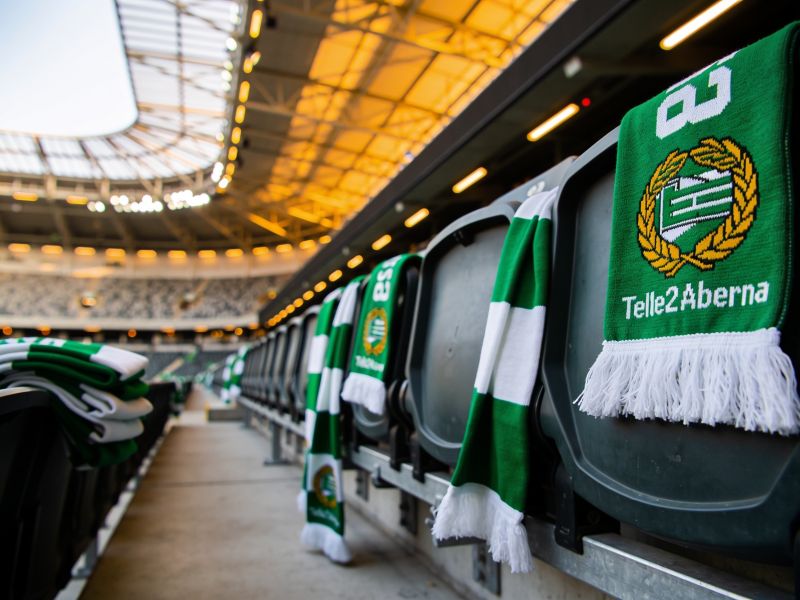
the club raised capital while preserving the 51-percent rule—the Swedish sports federation's requirement that member associations retain majority voting rights. That structure means every major decision, from stadium naming rights to player sales above a certain threshold, still passes through a room of paying members. It's slow. It's messy. It also explains why Hammarby didn't fold during the pandemic's empty-stadium season, when gate receipts vanished overnight. Supporters bought shares, renewed memberships early, and the club kept its academy running.On the pitch, the identity is harder to pin down. Hammarby's 2019 side under Stefan Billborn played a high-pressing 4-2-3-1 that relied on Muamer Tanković's movement between the lines and a surprisingly disciplined back four. Watch the footage from the 2-0 derby win against AIK that August—the second goal came from a twelve-pass sequence that started with goalkeeper Johan Wiland. It looked like a training-ground routine, not improvisation. That's the contradiction: a club with a romantic, chaotic supporter base playing some of the most structured football in the league. It worked until Billborn's successor。Miloš Milojević, tried to add more possession and the team lost its counter-attacking edge. Results dipped. The stands still filled.Tele2 Arena is where the culture becomes tangible. Average attendance in 2023 was just over 25,000—not the highest in Sweden。but the loudest on derby days. I stood in the east stand during a 1-1 draw with Djurgården last season and watched the away section empty ten minutes before full time while the home support stayed to applaud a team that had just dropped points. That's not normal. It reflects a membership culture where the club is treated as a community asset rather than a product. You see it in smaller things: the youth teams train in the same facility as the first team, and members get a vote on whether to allocate surplus funds to women's football or stadium upgrades. The women's team, Hammarby IF FF, won promotion to the Damallsvenskan in 2022—a direct result of that allocation vote.The real test is what happens next. Hammarby's revenue still lags behind Copenhagen and Rosenborg, and the club can't compete for established international signings. The supporter-share model keeps expectations honest. No one at Tele2 Arena expects a Champions League run;
they expect a competitive team, a functioning academy。and a say in how the money is spent. That's a different kind of ambition. Whether it produces another league title in the next five years is uncertain. Whether it keeps the club rooted in its district and its members is not. I'd argue that's the more valuable metric, even if it doesn't fit neatly into a league table.