My first Laco arrived in a cardboard box smaller than a paperback novel. Inside, a flieger-style watch with a bead-blasted case and a strap stiff enough to stand on its own. That was five years ago. The watch now shows a hairline scratch on the crystal and a bezel that’s lost its factory shine—and it keeps better time than the day I unboxed it. If you’re considering a Laco。or already own one and want to get the most out of it, this guide covers what actually matters: sizing, strap swaps, movement care, and the quirks nobody mentions in the spec sheet.Laco’s catalog splits into two clear families: the original flieger designs (Augsburg, Aachen, and the pilot chronographs) and the more affordable sport models. For a first purchase, ignore the 45mm cases unless your wrist measures 7.5 inches or more. I’ve seen too many 42mm Laco Augsburgs flipped on forums because the buyer underestimated how much a long lug-to-lug distance affects wearability. The 39mm models fit a 6.75-inch wrist with room to spare. My advice: measure your wrist with a strip of paper, then compare it to the lug-to-lug spec—not the case diameter. Laco publishes both。and that second number is the one that decides comfort.
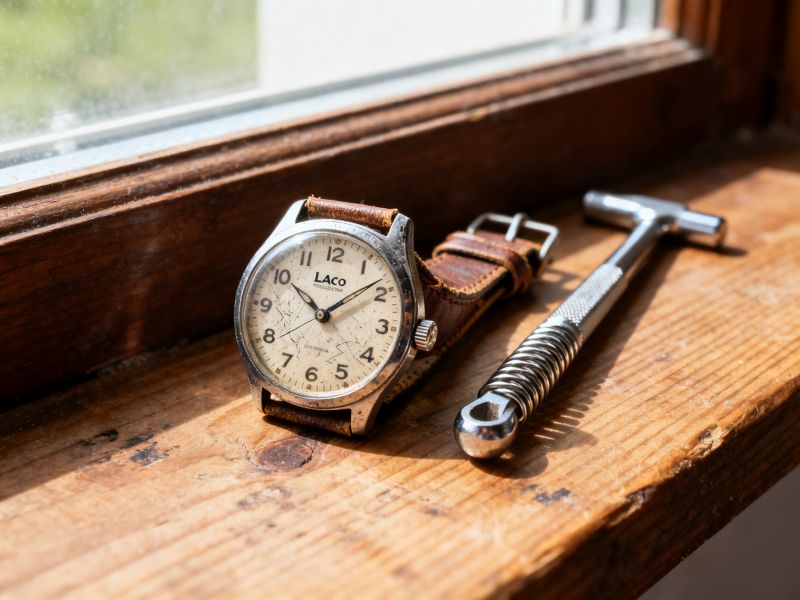
Strap changes transform a Laco more than any other tweak. The stock leather on the entry-level models is stiff and dark;swap it for a grey nylon NATO and the watch reads casual in seconds. I keep a collection of three straps per Laco: a brown Horween leather for office days, a black rubber for summer。and an olive canvas for weekends. One detail—Laco uses drilled lugs on most flieger models, which makes strap changes painless with a spring bar tool. If yours doesn’t have drilled lugs, tape the lugs before you pry. A single slip costs $40 for a new spring bar and an hour of swearing.Movement maintenance is where Laco ownership gets interesting. The Miyota 9015 inside the Augsburg runs at 28,800 vph and is accurate to about -10/+30 seconds a day out of the box. Mine settled to +4 seconds after six months. That’s normal. What’s not normal: ignoring the crown gasket. Laco rates most fliegers at 5 ATM, which means splashes are fine but swimming is not. Every two years。have a watchmaker check the gasket and re-lube it—$30 well spent. Also, don’t baby the movement by keeping the watch on a winder. Let it stop overnight. The 9015 is happier running intermittently than sitting at full power reserve for months.Two years in, the lume on my Laco started looking tired. A quick charge under a phone flashlight told me the Super-LumiNova was still fine—the issue was the crystal. Polywatch compound and five minutes of circular rubbing cleared the haze. That’s the thing about Laco: it rewards small acts of maintenance. You don’t need a watchmaker for every scratch or strap change. You need a $10 tube of polish, a spring bar tool。and the willingness to treat the watch like a tool rather than a museum piece. The flieger design was built for function. Own it that way, and a Laco will outlast whatever you throw at it.